
You set up a new WordPress site. You pick a free WordPress theme from the official directory, import a demo, tweak a few colors, add your logo, and hit publish. It feels like the smartest decision possible. There is no upfront cost, no design budget, and no friction. Within an hour, your site looks polished enough to share.
That simplicity explains why free WordPress themes are so popular. They promise speed, convenience, and zero financial commitment. With thousands of options available, it feels like there is no real downside. If one theme does not work out, you can always switch later. At least, that is what most site owners believe in the beginning.
The real question is not whether free WordPress themes work on day one. The real question is what “free” costs over time. Not in upfront dollars, but in security risks, performance problems, lost traffic, wasted hours, and forced rebuilds.
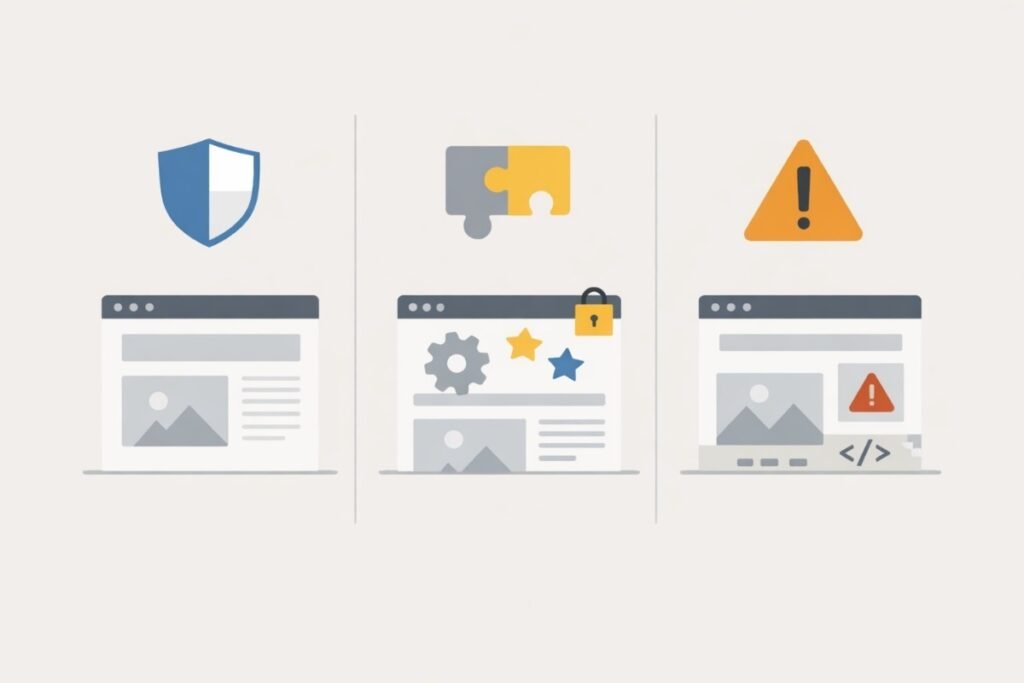
This article is not against free themes. Many free WordPress themes are well built and perfectly suitable in the right context. What follows is a realistic look at the hidden costs that often surface months or years later, once a site grows and expectations start to change.
Table of Contents
Section 1: What “Free” Really Means in the WordPress Ecosystem
In WordPress, the word “free” can mean several very different things.
Themes listed on WordPress.org follow GPL licensing and pass a basic review process. They are generally safe to install and legal to use. Still, “free” does not mean fully supported, actively improved, or optimized for every type of website.
Freemium themes make up another large category. These themes are free at their core but are designed to encourage upgrades. Basic layouts are available, while important features, templates, or controls remain locked behind a paid version. In many cases, the free version exists mainly as a marketing funnel.
Then there are third-party downloads, often found outside the official directory. These may include redistributed themes, modified copies, or abandoned projects. Even when labeled as free, this group carries the highest level of risk.
Across all these options, free usually means limited support, limited accountability, or design choices driven by upsells rather than long-term stability. The cost does not appear at checkout. It shows up later, when the theme can no longer keep pace with your site.
Section 2: The Security Cost Most Site Owners Don’t See Coming
Security issues rarely appear right away. A theme can function perfectly for months while quietly falling behind.
Theme security depends heavily on regular updates and active maintenance. When WordPress releases updates or hosting providers upgrade PHP versions, themes must adapt. A theme that updates slowly becomes an easier target over time.
If a theme is abandoned, vulnerabilities may never be patched. Often, site owners do not even realize the theme is no longer maintained. Everything appears normal until something breaks or the site is compromised.
The cost of a security incident goes far beyond repairing files. It often includes downtime, lost trust, cleanup services, and the stress of figuring out what went wrong. For business websites, even brief outages can directly impact leads or revenue.
That is why WordPress theme security is not just a technical concern. It is a business risk that grows quietly when a theme falls behind.
Section 3: Performance Debt That Hurts SEO and Conversions
When a site feels slow, many owners blame their hosting provider. In reality, the theme often plays a much larger role.
Some free WordPress themes load unnecessary scripts, multiple font families, heavy sliders, or complex layout systems by default. Even if you never use these features, their assets may still load on every page.
This hidden bloat affects Core Web Vitals, especially Largest Contentful Paint and Cumulative Layout Shift. Slower load times increase bounce rates and reduce engagement. Search engines notice this behavior, and rankings tend to decline over time.
Performance debt builds gradually. Each new plugin, widget, or customization adds more strain to the theme. Eventually, the site feels sluggish, and quick fixes stop working.
At that stage, improving performance often costs more time and money than choosing a better theme from the beginning.
Section 4: The Accessibility Cost You Inherit Without Realizing
Accessibility is one of the most overlooked aspects of WordPress themes.
Poorly maintained themes often lack proper keyboard navigation, skip links, focus indicators, or sufficient contrast. These gaps affect real users, not just accessibility checklists.
Accessibility matters for user experience, reach, and trust. A site that is difficult to navigate excludes users and sends a signal of poor quality. For businesses and organizations, accessibility gaps can also turn into legal or reputational risks.
Fixing accessibility problems after launch is expensive. It often requires custom development, testing, and partial redesigns. Choosing a theme with strong accessibility foundations is far easier than retrofitting later.
Over time, accessibility improves overall site quality, usability, and even SEO by encouraging better engagement.

Section 5: Design Lock-In and the High Cost of Rebuilding Later
One of the most painful hidden costs of free themes is lock-in.
Some themes rely heavily on shortcodes, theme-specific page builders, or proprietary layout systems. Pages may look great inside the theme but break apart the moment you try to switch.
As a site grows, its needs change. You may want faster performance, more design control, or better compatibility with modern WordPress features. When a theme resists change, a full redesign often becomes the only realistic option.
Rebuilding a site involves more than visual changes. It requires restructuring layouts, testing content, fixing broken elements, and sometimes rethinking the entire site architecture. What began as a free decision turns into a major project.
At this point, time becomes the most expensive currency.
Section 6: Support, Updates, and the Time Tax Nobody Calculates
When something breaks on a free theme, support is usually limited to community forums. Responses may be slow, incomplete, or outdated. In some cases, there is no response at all.
This forces site owners into trial-and-error troubleshooting. Small issues turn into hours of searching, testing, and guessing. Even experienced users lose valuable time this way.
The time tax is rarely tracked, but it adds up quickly. Every hour spent fixing theme issues is an hour not spent creating content, improving products, or growing the site.
Paid themes often justify their cost through reliable support alone. Free themes quietly shift that cost onto the user.

Section 7: When Free WordPress Themes Are Actually a Good Choice
Despite these drawbacks, free WordPress themes are not always a bad option.
They work well for simple blogs, learning projects, experiments, or short-term sites. They are also useful for testing ideas before committing serious resources.
The key is choosing carefully. A healthy free theme typically shows frequent updates, a large active install base, clear documentation, and a simple design philosophy. Fewer features often mean fewer problems.
If a project does not require long-term scalability, advanced customization, or high performance, a well-maintained free theme can be more than sufficient.
Section 8: How to Evaluate a Free WordPress Theme Before You Commit
Before installing a free theme, look beyond the demo.
Check the update history and last modified date. Active install numbers and recent reviews provide important signals. Pay close attention to negative reviews to spot recurring issues.
Evaluate performance and simplicity. Avoid themes that try to do everything at once. Also, confirm compatibility with modern WordPress features such as block editing and full site editing.
Finally, think about the exit cost. Ask yourself how difficult it would be to switch themes later. If the answer is unclear, that uncertainty itself is a hidden cost.
Conclusion: The Real Question Isn’t “Is It Free?”
Free WordPress themes often feel costless at the start. Over time, the real costs surface through security risks, performance issues, accessibility gaps, lost time, and forced rebuilds.
The smarter question is not whether a theme is free, but whether it supports the future you want for your site. Choosing a theme is a long-term decision, even when no money changes hands upfront.
Now think back. What was the most expensive “free” decision you have made for your website?
Share your experience in the comments. Real stories help other site owners avoid the same hidden costs and make better decisions from the start.
Read Also: The Hidden Costs of “Cheap Hosting” No One Mentions