
You launch a new blog. Articles go live. Basic pages are set up. You hit submit on your AdSense application.
Then? The waiting game begins.
Days stretch into weeks. Your AdSense dashboard stays frozen on “Getting ready.” Doubt creeps in. Did I miss something critical? Is my site fundamentally flawed? Should I have started on a different platform?
For years, one belief has quietly dominated blogging forums and YouTube tutorials:
“Blogger gets AdSense approval faster than WordPress.”
In 2026, that belief still shapes how thousands of beginners choose their platform. Some launch on Blogger purely for the assumed approval advantage. Others swear WordPress works just as well—if you know what you’re doing.
That brings us to the question this article will answer—without myths, shortcuts, or platform bias:
Is Blogger still easier for AdSense approval in 2026, or has WordPress finally closed the gap?
This isn’t a nostalgic comparison. It’s grounded in how AdSense approval actually works today, what Google expects in 2026, and how real-world outcomes differ between these two platforms.
Section 1: How AdSense Approval Actually Works in 2026
Before comparing platforms, you need to understand the current approval process.
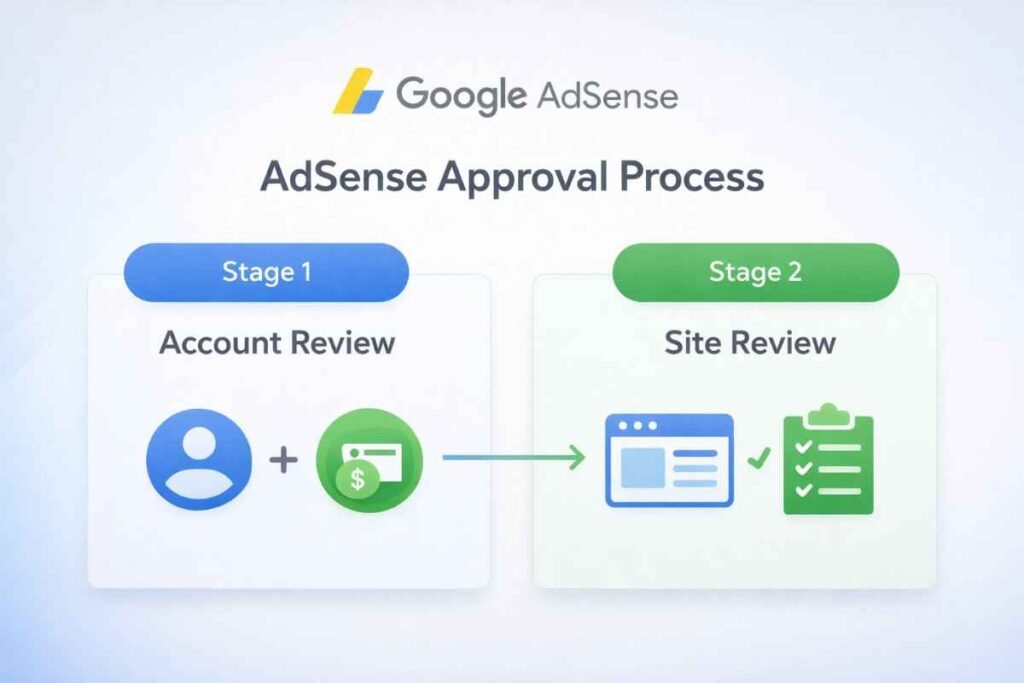
The 2026 AdSense approval follows two distinct stages.
Stage 1: AdSense Account Review
Google focuses on your account details, payment information, and basic eligibility. Most accounts clear this stage within days, though verification issues occasionally extend the timeline.
Stage 2: Site Review
This is where most publishers hit roadblocks. Google evaluates your website across several core dimensions:
- Content quality and originality
- Policy compliance
- User experience standards
- Site behavior and overall structure
Most sites receive a decision within days to two weeks. However, Google extends reviews when it detects potential risks or inconsistencies.
💡 Expert Insight: If approvals feel slower than they did years ago, your perception is accurate. Google has steadily tightened standards as ad fraud, low-quality websites, and mass-produced AI content have flooded the web.
Here’s the crucial clarification:
Platform choice does not bypass AdSense policies.
Blogger, WordPress, or any other CMS must meet identical fundamental requirements.
So if the process is the same for everyone, why does Blogger still feel easier?
Section 2: Why Blogger Has Always Felt “AdSense-Friendly”
Blogger’s reputation for easier approval didn’t appear by accident. The platform removes friction—especially for newcomers.
Blogger Is Google-Owned
Blogger belongs to Google’s ecosystem. While this doesn’t guarantee approval, it does mean the platform naturally aligns with Google’s publishing expectations.
Built-In AdSense Integration
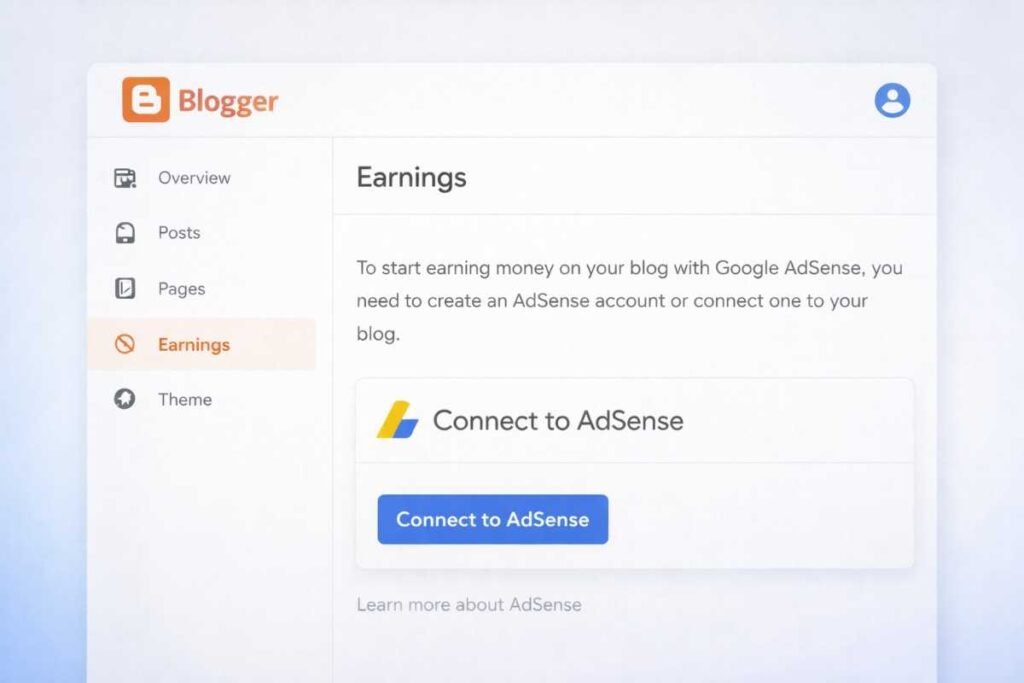
Blogger includes a dedicated Earnings section. Users apply for AdSense directly through the dashboard. No manual code placement. No header editing. No guessing where scripts belong.
For beginners, this alone eliminates several common rejection triggers.
🎯 Pro Tip: The built-in integration means your AdSense code is automatically placed in policy-compliant locations. Manual implementations often fail because publishers accidentally place ads too close to navigation elements or clickable buttons.
Fewer Technical Failure Points
On Blogger, certain problems simply can’t happen:
- Plugins can’t break layouts or inject risky scripts
- Themes are simpler and less aggressive by default
- Crawl and indexing issues rarely occur without manual intervention
New publishers often avoid accidental policy violations without realizing it.
This explains why first-time bloggers receive approval faster on Blogger. Not because Google favors the platform, but because there are fewer ways to make mistakes.
Quick engagement check: Was your first AdSense approval on Blogger? Many experienced publishers say it was.
Section 3: WordPress Is Not One Platform (And This Matters)
Here’s where confusion intensifies. WordPress is often treated as a single entity. It’s not.
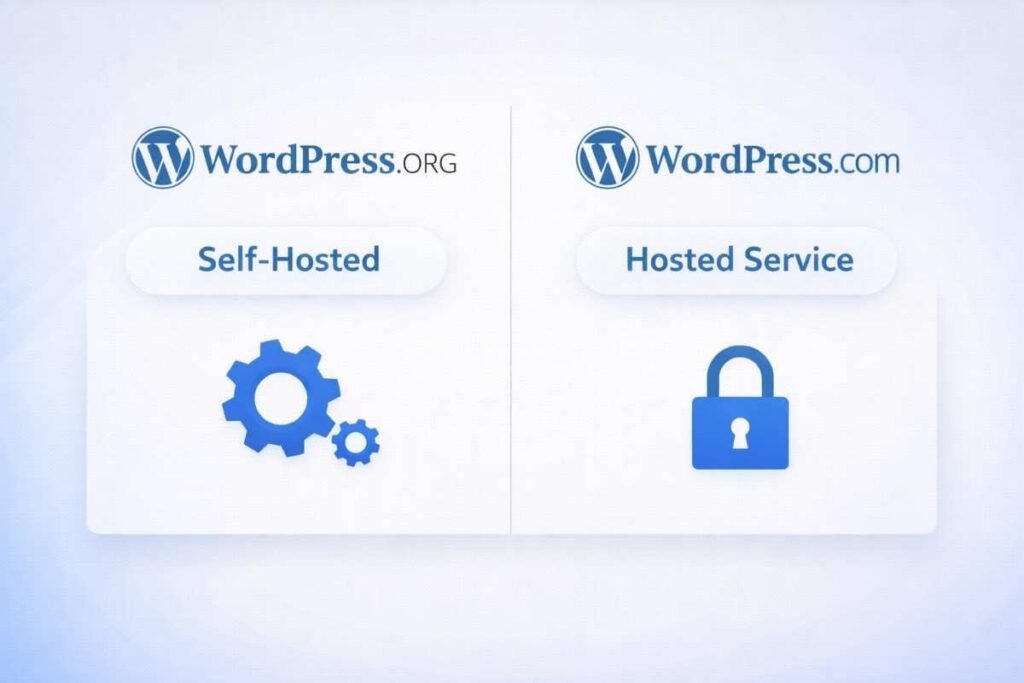
Self-Hosted WordPress (WordPress.org)
This is what most people mean by “WordPress.”
You get complete control. With that control comes complete responsibility.
Common AdSense approval blockers on self-hosted WordPress:
- Ad code placed incorrectly or buried on low-visibility pages
- Pages unintentionally set to noindex
- Aggressive pop-ups, interstitials, or forced redirects
- Heavy themes that damage page experience scores
- Plugins that inject affiliate links or misleading UI elements
⚠️ Expert Advice: Before applying for AdSense on WordPress, audit your site with Google Search Console. Check for indexing issues, crawl errors, and mobile usability problems. These technical oversights cause more rejections than content quality.
None of these issues are inherent to WordPress itself. They happen because WordPress allows extensive customization.
That freedom is powerful. It also increases rejection likelihood—especially for beginners unaware of these risks.
WordPress.com
WordPress.com is a hosted service with its own monetization rulebook.
While AdSense is supported, users encounter:
- Limitations on ad code placement
- Plan-based monetization restrictions
- Confusion between WordPress.com rules and AdSense policy
Many bloggers believe AdSense rejected them when, in reality, WordPress.com’s platform limitations were the barrier.
This misunderstanding fuels the perception that WordPress is inherently harder.
💡 Pro Tip: If you’re on WordPress.com’s free or personal plan, you cannot use AdSense. You need at least the Premium plan. This trips up countless beginners who blame AdSense for rejections that never actually happened.
So is Blogger truly easier—or simply more forgiving for beginners?
Section 4: What Has Changed in AdSense Approval by 2026
This question still matters in 2026 for one reason: AdSense has evolved significantly.
Google now emphasizes three areas with unprecedented weight.
Site Trust
Trust signals matter more than ever. Clear navigation, transparent authorship, consistent publishing patterns, and about/contact pages all contribute to perceived credibility.
User Experience
Intrusive ads, deceptive buttons, forced redirects, and cluttered layouts trigger rejection far more readily today than in previous years.
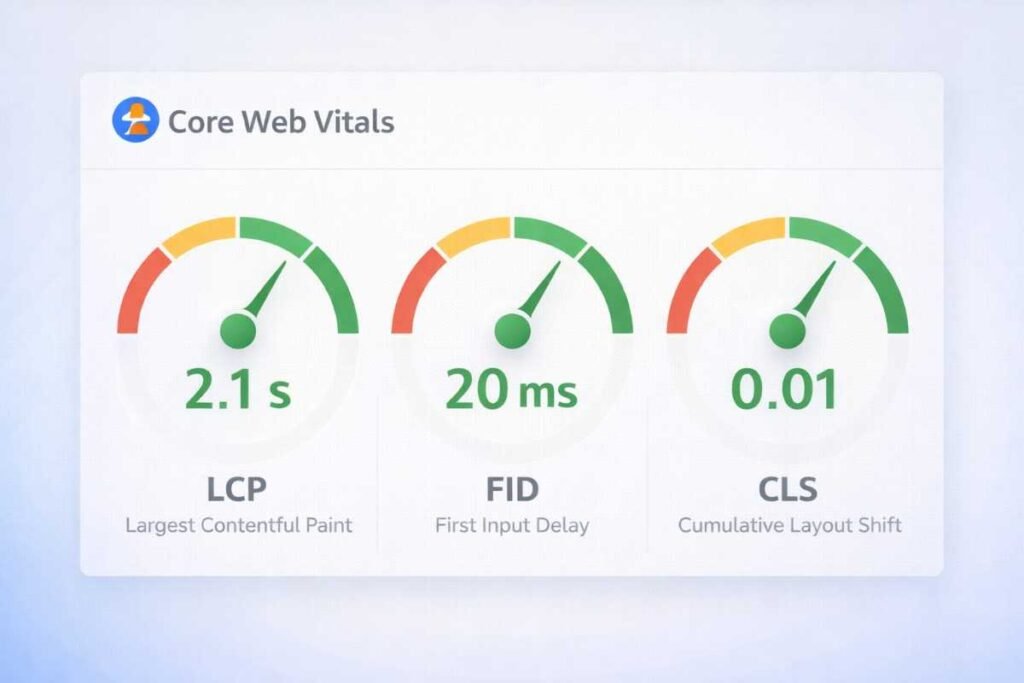
🎯 Expert Insight: Google’s Core Web Vitals are now unofficially part of the approval process. Sites with poor Largest Contentful Paint (LCP) or Cumulative Layout Shift (CLS) scores face higher scrutiny.
Privacy Compliance
Cookie disclosures, privacy policies, and responsible data handling are baseline expectations, not optional extras.
Thin websites built purely for monetization—especially rushed or low-effort AI-generated blogs—struggle regardless of platform.
Approval feels stricter today not because platforms changed, but because Google raised the bar.
Section 5: Blogger vs WordPress — Approval Difficulty Comparison
Here’s how the platforms realistically compare in 2026.
Content Quality
Winner: Tie Both platforms require original, helpful content. Blogger doesn’t lower this standard.
Technical Setup
Winner: Blogger Blogger wins decisively for simplicity. WordPress requires careful configuration and technical awareness.
Approval Speed Trends
Winner: Blogger (for beginners) Blogger often delivers faster approvals for newcomers. Well-optimized WordPress sites match or exceed that speed.
💡 Pro Tip: If you’re using WordPress and want approval speed comparable to Blogger, use a lightweight theme like GeneratePress or Astra, minimal plugins (under 15), and manually verify your AdSense code placement before applying.
Common Rejection Reasons
Blogger: Thin content, incomplete pages, insufficient posts
WordPress: Technical misconfiguration, UX violations, plugin conflicts, indexing issues
Long-Term Monetization Flexibility
Winner: WordPress offers superior control over ad placement, layout testing, and revenue optimization strategies.
Blogger trades flexibility for simplicity.

Section 6: Real-World Scenarios (What Actually Happens)
Scenario 1: A New Blogger With Zero Technical Skills
Verdict: Blogger performs better.
Fewer mistakes. Faster setup. Smoother approval process.
Scenario 2: A Niche Site Owner Focused on SEO and Growth
Verdict: WordPress wins.
While approval requires more effort, long-term benefits outweigh initial friction.
🎯 Pro Tip: If you choose WordPress for growth potential, invest time upfront in learning proper site structure. Use Yoast SEO or Rank Math, create an XML sitemap, and submit it to Google Search Console before applying for AdSense.
Scenario 3: A Publisher Planning Advanced Ad Optimization
Verdict: WordPress becomes the clear choice.
Blogger’s limitations grow increasingly noticeable as traffic scales.
The takeaway? Ease of approval doesn’t equal suitability for growth.
Section 7: So, Is Blogger Still Easier for AdSense Approval in 2026?
Here’s the honest verdict.
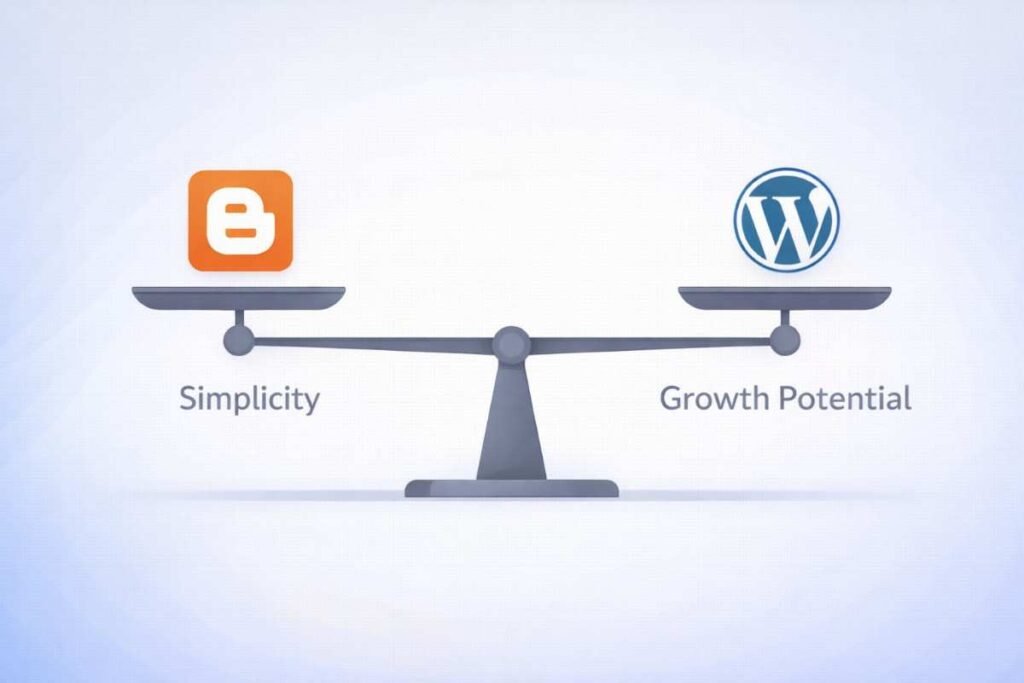
Yes, Blogger is still easier for beginners who want fast approval with minimal setup.
No, Blogger is not the better choice for serious publishers who plan to scale.
The real difference isn’t favoritism. It’s ease of setup versus quality of execution.
WordPress isn’t harder because Google dislikes it. It’s harder because it expects you to understand what you’re doing.
⚠️ Expert Reality Check: A poorly configured WordPress site will struggle. A well-configured WordPress site often outperforms Blogger—not just in approval speed, but in long-term monetization potential.
Section 8: Which Platform Should You Choose for AdSense in 2026?
Choose Blogger if:
- You want the simplest path to approval
- You prefer minimal technical work
- You’re testing blogging for the first time
- You need approval quickly to validate your niche
Choose WordPress if:
- You want long-term scalability
- You plan to optimize ads, SEO, and layout
- You care about revenue growth beyond initial approval
- You’re willing to invest time learning proper setup
Keep this in mind: AdSense approval is only step one. Real earnings come later.
💡 Final Pro Tip: Regardless of platform choice, focus on these approval essentials: 20+ quality posts, clear about/contact/privacy pages, mobile responsiveness, and zero copyright violations. These fundamentals matter more than platform selection.
Conclusion: The Platform Is Not the Shortcut You Think It Is
Blogger feels easier because it removes common beginner mistakes.
WordPress feels harder because it demands discipline and understanding.
In 2026, AdSense approval depends far less on platform choice and far more on:
- Site trust signals
- Content quality and originality
- User experience standards
There’s no shortcut—only trade-offs.
Now your turn: Did you get AdSense approval faster on Blogger or WordPress? Share your experience in the comments and help other publishers make smarter choices.
📌 Quick Reference Guide:
| Factor | Blogger | WordPress |
|---|---|---|
| Setup Difficulty | Easy | Moderate to Hard |
| Approval Speed | Faster (typically) | Variable |
| Long-term Potential | Limited | Excellent |
| Technical Skills Required | Minimal | Moderate to High |
| Monetization Control | Basic | Advanced |
| Best For | Beginners, hobbyists | Serious publishers |
Read Also: The Most Googled WordPress Errors in 2026 (And What They Really Mean)