
You are launching a small website in 2026. Maybe it is a personal blog, a local business site, a portfolio, or a small ecommerce store. You look up hosting advice and almost every guide pushes you toward the same answer: cloud hosting. Faster speeds. Better uptime. Infinite scalability. It sounds like the smart move.
For years, cloud hosting has been sold as the modern default. The pitch is simple. Your website runs on flexible infrastructure that can grow with you, absorb traffic spikes, and keep running even when something goes wrong.
But as more small site owners live with it, another question keeps surfacing. Do small websites really need this level of complexity? Or has cloud hosting become a confusing solution for problems many small sites never actually face?
That is why this matters in 2026. Cloud hosting is still powerful, but it is not always simple. Pricing is harder to predict. Dashboards are packed with options. Even small changes in usage can move the bill. For many small websites, cloud hosting feels less like freedom and more like extra work.
So the real question is not whether cloud hosting works. It does. The question is whether cloud hosting is still the right fit for small websites in 2026, or whether simpler alternatives now deliver better value.

Table of Contents
Section 1: What Counts as a “Small Website” in 2026?
Before you can judge whether cloud hosting is worth it, you need a clear definition of “small website” in 2026.
A decade ago, the label was simple. Low traffic. Basic pages. Minimal features. Today, that definition falls short.
Even small websites can be demanding now. Pages are heavier. Visitors expect fast load times. Security expectations are higher. Yet many small sites still behave in predictable ways. Traffic is steady. Content is focused. Growth is gradual.
So what does “small” usually mean in practical terms?
Traffic is typically low to moderate, ranging from a few hundred to tens of thousands of visits a month. The pattern stays mostly stable, with occasional spikes from promotions, social sharing, or seasonal interest.
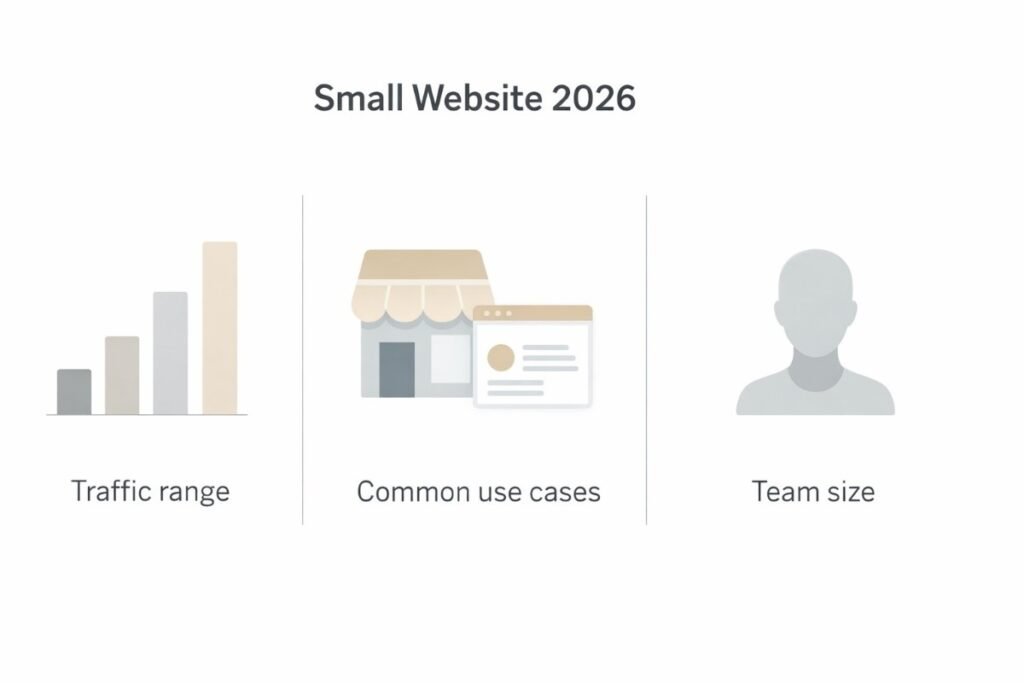
The use cases are familiar: blogs, local service businesses, personal brands, portfolios, small ecommerce catalogs, and niche content sites. These sites matter to the owner, but they are not running at startup or enterprise scale.
The team is usually one person, or a very small group. Skill levels vary, but the goal is often the same: keep the site fast and secure without spending every week managing infrastructure.
That context changes everything. Hosting should match today’s needs, not a future that may never arrive. Many small websites choose cloud hosting because it sounds like the “professional” option, not because they truly need what it offers.
Section 2: Why Cloud Hosting Became the Default Choice
Cloud hosting became popular for real reasons.
In the early 2010s, shared hosting had obvious limits. Websites fought for resources. Performance varied from one day to the next. Downtime was common. Scaling often meant rebuilding or migrating.
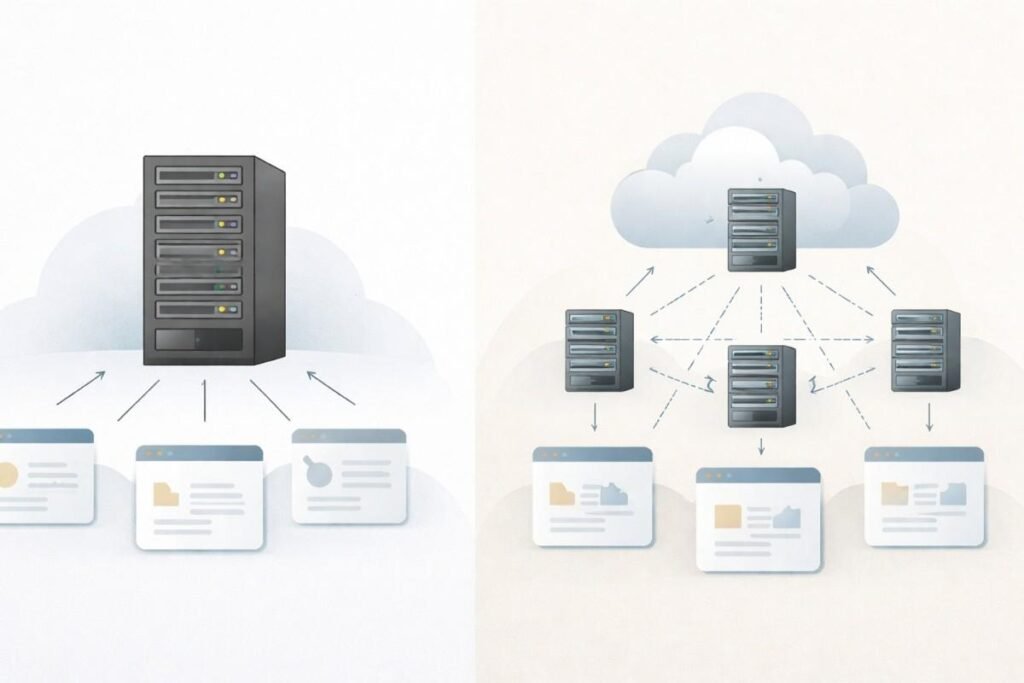
Cloud hosting promised a cleaner solution. Instead of tying your site to a single server, you ran it on flexible infrastructure across multiple machines. Resources could scale up when traffic surged and scale down when it eased. If one part failed, another could take over.
Three advantages made cloud hosting feel inevitable.
Scalability came first. A site that could survive a sudden traffic spike without crashing felt like a major upgrade, especially as viral posts and paid ads became normal.
Performance was next. Cloud platforms paired well with CDNs, helping sites load faster across regions.
Reliability rounded it out. Providers marketed redundancy and high uptime as built-in features, which appealed to businesses that could not afford frequent outages.
Those benefits still matter in 2026. The difference is this: you can now get many of those advantages without going full cloud.
Section 3: The Real Costs of Cloud Hosting for Small Websites
For small website owners in 2026, cost is not always the issue. Cost clarity is.
Cloud hosting is not automatically expensive. The problem is that it is often hard to predict. Traditional hosting usually comes with a fixed monthly price. Cloud hosting often charges based on usage. That includes compute time, storage, bandwidth, and a long list of add-on services.
And that is where surprises creep in.
Bandwidth and data transfer costs can jump quickly, especially if your site serves lots of images, videos, or downloadable files. A traffic spike can be great news, but it can also raise costs overnight.
CDNs improve performance, but they can add another layer of billing that many people do not fully understand at the start.
Then there are the extras. Backups, monitoring, security tools, and logging are often separate charges. Many small site owners assume these are included, then discover they are not.
“Pay only for what you use” sounds fair in theory. In practice, many small sites value predictability more than optimization. A plan that costs a bit more but stays stable each month can feel less stressful than a bill that fluctuates.
That is why cloud hosting costs can feel confusing for small websites. It is not necessarily overpriced. It is just harder to plan around.

Section 4: Performance Reality in 2026: Do Small Sites Really Need the Cloud?
Performance is often the biggest reason people choose cloud hosting. It is also the most misunderstood.
In 2026, speed depends on much more than server power.
Page weight matters. Modern websites use larger images, more scripts, and heavier fonts. In many cases, optimizing assets delivers bigger gains than upgrading infrastructure.
Caching matters even more. With good caching, a site can serve pages fast even on modest hosting.
CDNs have become standard too. Many non-cloud hosting providers now include CDNs that handle static content efficiently around the world.
For small websites with steady traffic, these factors usually matter more than scalability alone. A well-managed hosting environment with solid caching and CDN integration can match cloud performance for everyday visitors.
Cloud performance becomes noticeable when traffic is unpredictable or when workloads change often. If your site’s demand stays stable, the extra complexity may not buy you much speed.
Section 5: Security, Reliability, and Downtime Trade-Offs
Cloud hosting is often linked with strong security and reliability. That reputation is partly earned, but it needs context.
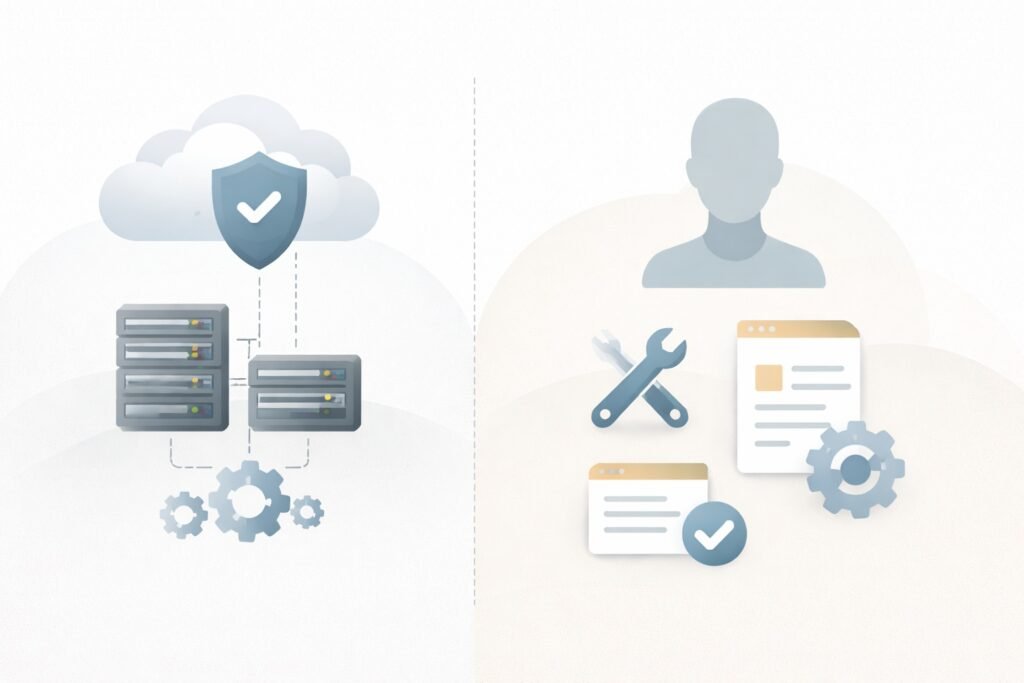
Cloud platforms offer powerful security tools, yet most operate on a shared responsibility model. The provider secures the infrastructure. You still handle configuration, updates, and access control.
For small site owners, that can be a problem. One wrong setting can create risk, even on a secure platform.
Reliability is similar. Cloud hosting reduces certain failures, but it does not eliminate downtime. Network issues, configuration mistakes, and third-party dependencies can still take sites offline.
That is why practical security matters most in 2026. Regular updates, strong passwords, reliable backups, and basic monitoring often prevent more real-world problems than advanced features that never get used.
Cloud hosting can improve security, but only if it is managed correctly. For many small sites, managed hosting delivers safer results with less effort.

Section 6: Simpler Hosting Alternatives That Compete in 2026
One reason this debate exists at all is simple: hosting has improved.
Managed WordPress hosting has matured fast. Many providers now include automatic updates, built-in caching, security monitoring, and CDN integration. For content-heavy sites, that combination can feel close to cloud performance without the complexity.
High-quality shared hosting has also changed. The best providers now isolate accounts better, run faster hardware, and offer performance tools that were once reserved for premium setups.
Lightweight VPS or hybrid hosting sits in the middle. You get more control than shared hosting, but you avoid the full overhead of building on a cloud platform from scratch.
These options are not “second best.” They are strategic. For many small websites, they solve the real problems without adding new ones.
Section 7: When Cloud Hosting Is Still Worth It for Small Websites
Cloud hosting still makes sense in the right situations.
If your site sees frequent, unpredictable traffic spikes, cloud scalability can prevent crashes and protect revenue.
If your site is media-heavy, cloud infrastructure paired with strong delivery networks can handle large files more smoothly.
If your audience is global, cloud-based setups can reduce latency by serving content closer to users.
And if you run ecommerce with seasonal demand, cloud hosting can let you scale up during peak weeks without paying for that capacity year-round.
In short, cloud hosting is worth it when it solves a current problem. The mistake is choosing it only because it feels future-proof.
Section 8: A Simple Decision Framework for 2026
If you are deciding whether cloud hosting is worth it in 2026, ask yourself these questions.
Is your traffic predictable, or does it swing without warning?
Do you need rapid scaling right now, or do you mainly need speed and reliability?
Do you prefer a stable monthly cost, even if it is slightly higher?
How much technical work are you willing to take on long-term?
Your answers matter more than any marketing claim. Hosting is not about picking the most advanced option. It is about choosing the option that fits your site, your workload, and your budget.
Conclusion: So, Is Cloud Hosting Still Worth It in 2026?
Cloud hosting is still a powerful tool in 2026, but it is no longer the automatic best choice for small websites.
For many small site owners, simpler hosting options now deliver better value. They offer clearer pricing, less complexity, and strong performance. Security and speed are no longer cloud-only benefits.
The best hosting choice depends on real needs, not trends. Cloud hosting is worth it when it solves a specific problem. If it does not, it often becomes unnecessary overhead.
If you already run a small website, this is a good time to review your setup. Are you using cloud hosting because you need it, or because it felt like the safest choice?
And if you are building something new, here is the question that matters most. What kind of hosting will help you spend more time improving your website, and less time managing what runs behind it?
Read Also: The WordPress Security Checklist Every Small Business Should Follow in 2026